


Understanding Labels
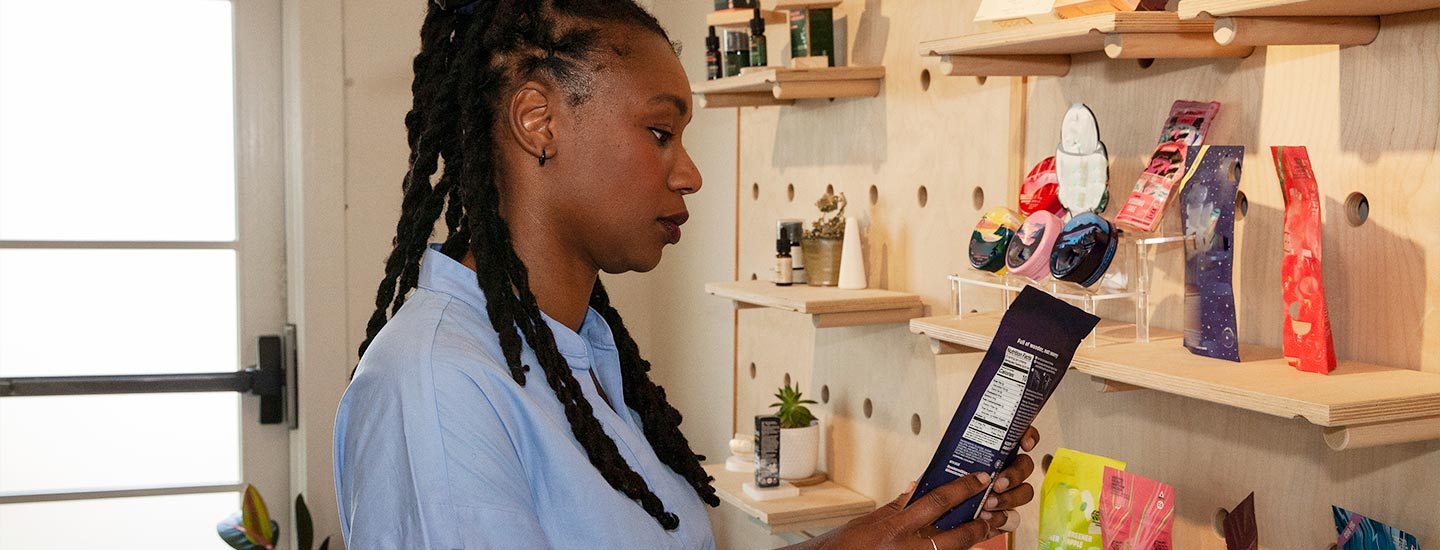
In Massachusetts, all marijuana and marijuana products sold at licensed Marijuana Establishments and Medical Marijuana Treatment Centers (MTCs) must have labels. Before you make a purchase, check for the information highlighted below to differentiate a state-regulated marijuana product from an unregulated one, or from a hemp-derived product that is not under the purview of the Cannabis Control Commission.
Universal Symbols
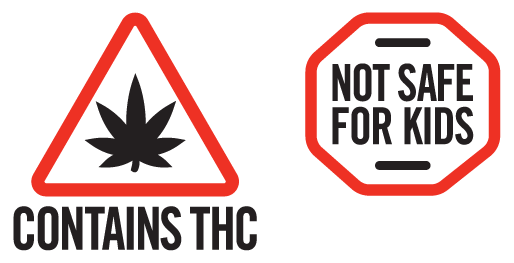
In Massachusetts, all legal marijuana product packaging must have two symbols: A red triangle with a cannabis leaf indicating that the product contains tetrahydrocannabinol (THC), the mind-altering ingredient in cannabis, and a red octagon indicating the product is harmful to children.
General Requirements
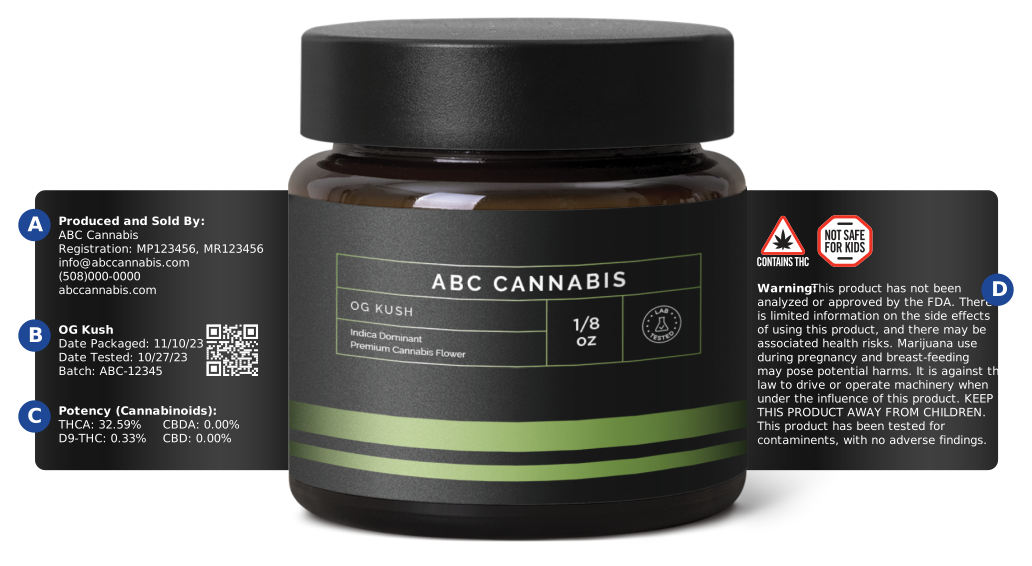
| Marijuana and marijuana product labels must include: | |
 |
The license number and contact information for the licensee that produced the product; |
 |
The batch number, serial number, or bar code, as well as the date and results of testing; (Please note: Test results are only valid for one year.) |
 |
A list of ingredients, including but not limited to, the full cannabinoid profile expressed in absolute terms; and |
 |
A warning related to health risks, including those associated with use while pregnant or breastfeeding, as well as a warning not to drive or operate machinery under the influence. |
Product-specific Requirements
Flower products (raw pre-rolls and buds) must denote the licensee that sold the product, as well as their contact information.
Edibles, concentrates/extracts, tinctures, and topicals must include the ingredient list and extraction method. They also must have serving size information, if applicable, directions for use, as well as whether an item was produced in a facility containing common allergens such as milk, eggs, fish, crustacean shellfish, tree nuts, wheat, peanuts, and soybeans, or such other allergen identified by the U.S. Food and Drug Administration (FDA). A list of ingredients including but not limited to the full cannabinoid profile of the Marijuana contained within the Marijuana Product should be expressed in absolute terms. For example, for adult-use edibles, there is a limit of no more than 5.50 mg of delta-9-tetrahydrocannabinol (D-9-THC) per serving. There is no serving size limit for medical edibles.
Vaporizer products must list information related to the use of additives and the source of any terpenes. All products tested in Independent Testing Laboratories (ITLs) generate a Certificate of Analysis (COA) which identifies the test results of the product. A copy of the Certificate of Analysis identifying the test results for any applicable thickening agent, thinning agent, or terpenes must be available upon request at the time of sale. Consumers can request COAs for the products made available for sale.
Understanding Cannabinoids
Cannabis contains over 100 active chemical compounds called cannabinoids. Phytocannabinoids are the naturally occurring chemical compounds found mainly in cannabis that bind to receptors in the body’s endocannabinoid system, influencing a variety of physiological processes like mood, appetite, pain, and memory.
The most widely known and studied cannabinoids are tetrahydrocannabinol (THC, also known as Delta-9-THC) and cannabidiol (CBD), but there are many other cannabinoids you may not know about, such as: THCA, THCV, CBDA, CBG, CBN, Delta 8-THC, and Delta-10-THC.
Cannabis product labels in Massachusetts are required to include the cannabinoid profile (i.e. the THC and CBD make-up) of each product, with specific percentages determined from testing. Generally, products with a higher THC percentage will have greater psychoactive effects. When taken in high doses, potent products may cause hallucinations, delusions, and even psychosis.
Guide to Cannabis Compounds



Tetrahydrocannabinol
THC is responsible for the ‘high’ that many people experience when using cannabis. It can produce a sense of euphoria or intense happiness but has the most potential for misuse.
Tetrahydrocannabinolic Acid
THCA is the acidic form of THC, which transforms into THC through a process called decarboxylation, usually through heat application or aging.
Tetrahydrocannabivarin
THCV is similar to THC but has unique effects, such as appetite suppression, energizing effects, and potential medical benefits like helping to regulate blood sugar levels and insulin production.
Cannabidiol
CBD is non-psychoactive. It can change how the body feels pain and responds to inflammation from an injury or a health problem while also creating a feeling of relaxation. CBD can also affect the impact of THC.
Cannabidiolic Acid
CBDA is the raw, acidic form of CBD. It doesn’t produce the same effects as CBD until it undergoes decarboxylation.
Cannabigerol
CBG is often referred to as the “mother cannabinoid” because it is the precursor to several other cannabinoids, including THC, CBD, CBC, and CBN.
Cannabinol
CBN is a mildly psychoactive cannabinoid that is created when THC breaks down over time. This process happens as cannabis ages or when THC is exposed to heat or oxygen.
Delta-8-THC, Tetrahydrocannabinol
Delta-8-THC is less potent and often produces milder effects. Delta-8-THC is typically manufactured through a chemical process to concentrate it from CBD.
Delta-10-THC, Tetrahydrocannabinol
Delta-10 THC is synthetically derived in most cases. It is typically created by manipulating CBD (cannabidiol) extracted from hemp through a process called isomerization.

Serious reaction?
Call 911

Poison Control Hotline
800-222-1222

Pet Poison Hotline
855-764-7661